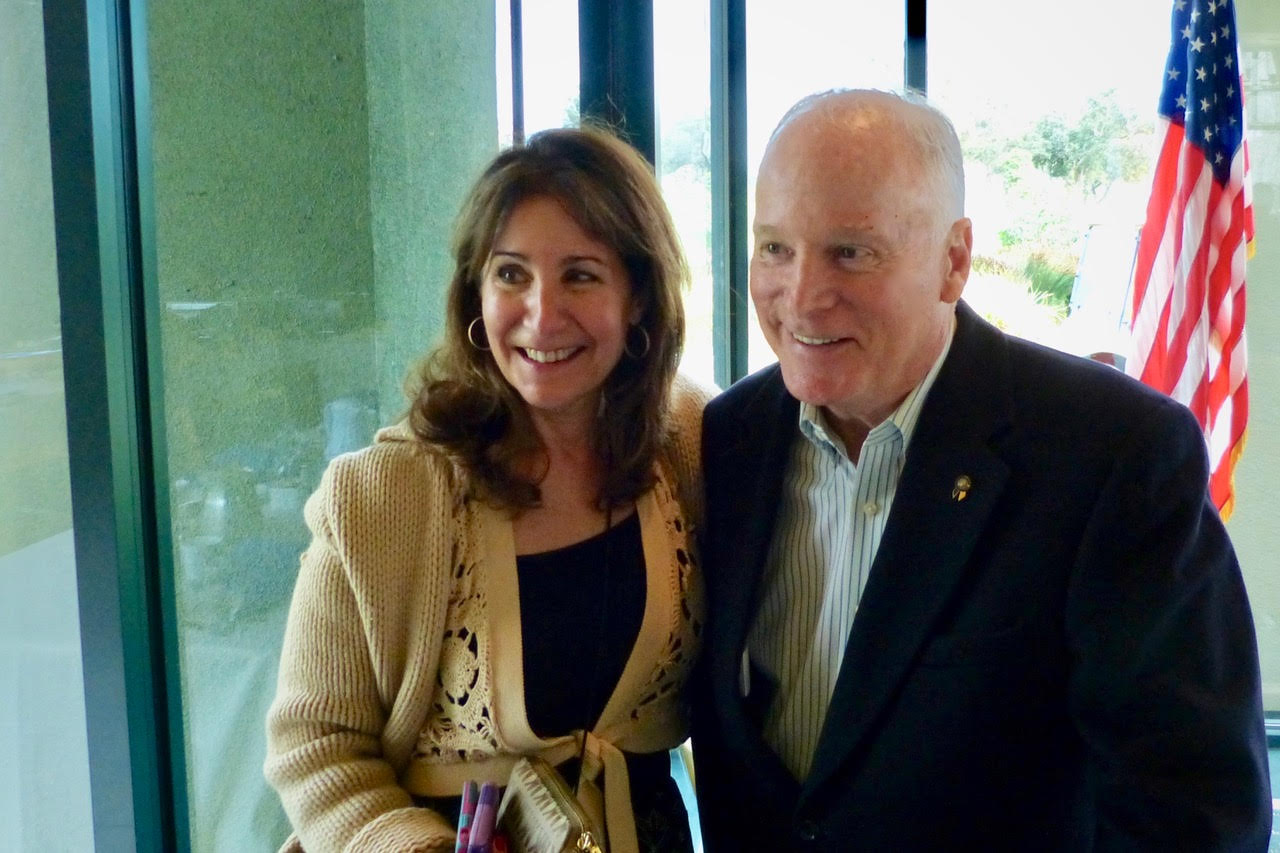
Bob Hortop, Executive Director of Mills-Peninsula Medical Group (MPMG) and former Rotarian, explained why physicians join certain medical groups, what physician organizations exist on the Peninsula and how insurance companies contract with physician groups to create their networks.
Bob began by explaining the difference between closed system networks and open system networks. Closed system networks like Kaiser are gaining in popularity among the insured due to their lower cost and access to good medical care. Open network systems like MPMG and Palo Alto Medical Foundation (PAMF) allow the insured to choose their doctors and specialists but tend to be more expensive. Within the open network system, doctors choose to be part of a partner-based physician organization like PAMF or to be an independent physician who belongs to the Independent Physicians Association (IPA).
The need for PAMF was recognized about 9 years ago when new physician recruiting became difficult in our area. High housing costs, high office rental costs and high staffing costs for nurses and staff help, especially those with computer skills, resulted in many newly minted physicians not wanting to establish their practice in our community. Back in 2009, the thinking was that most doctors would join PAMF and that we would see a steady erosion of IPA doctors. The trend of the past 8 years actually shows that not as many doctors are joining PAMF as expected. The reason is two-fold: 1) the costs associated with transitioning doctors from IPA to PAMF salaried is expensive at $1 million per onboard doctor, and 2) IPA doctors are making a good salary and they want to retain control of their business, of which 60% is overhead cost. Bob believes that this trend will continue and that our community will eventually see close to a 50/50 equilibrium between IPA and PAMF physicians.
Regardless of physician group, IPA or PAMF, doctors need to be represented as a collective group to obtain good rates from insurance companies so they can be competitive. This is known as the Health Care Industrial Complex. This has opened the door to a new set of problems, broadly labeled Narrow Network Products. Favored by Union Groups, these products exclude doctors and hospitals within our area that have been deemed as too costly by insurers like Blue Cross and Blue Shield. Bob describes Narrow Network Products as the Kmart of Healthcare.
During the Q&A session, Stanford’s local presence was questioned, especially the physical locations in Redwood City (old Excite building), San Carlos, and soon to be in Burlingame (old Radio Shack building). Bob said that Stanford’s strategy for local presence throughout the Peninsula is to become the preferred provider for primary care services and when a specialist and/or hospitalization is needed, Stanford becomes the de facto provider of choice. Universal healthcare with a private rider option was also questioned. Of the G8 countries, the United States is the only country without any form of universal health care, likely due to lobbyists and a hereto now inability to figure out how to maintain doctors incomes and/or salaries.

 Pledge of Allegiance was said by all.