President Doug Person called the meeting to order.
Past President Fritz Brauner led the Pledge of Allegiance.
Invocation:Paul Watermulder reflected on service above self and shared several stories of people who made exceptional sacrifices for the sake of others. Thank you, Paul!
Visiting Rotarians and Guests: CharleneDrummer introduced today’s speaker, Tami Mulcahy, from the Los Altos Rotary Club. Al Royse introduced three guests who are back for their second visits, Jeffrey Lines, Marcella Salceda, and Mario Salas,
Announcements:
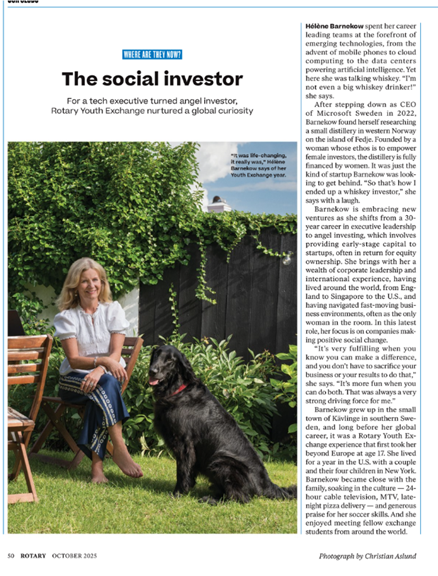
Jay Miller discussed the article on page 50 of this month’s Rotary Magazine entitled “The Social Investor.” The woman featured in the article is the CEO of Microsoft Sweden and was a Rotary Scholar as a young person. Jay says the article shouldn’t be missed!
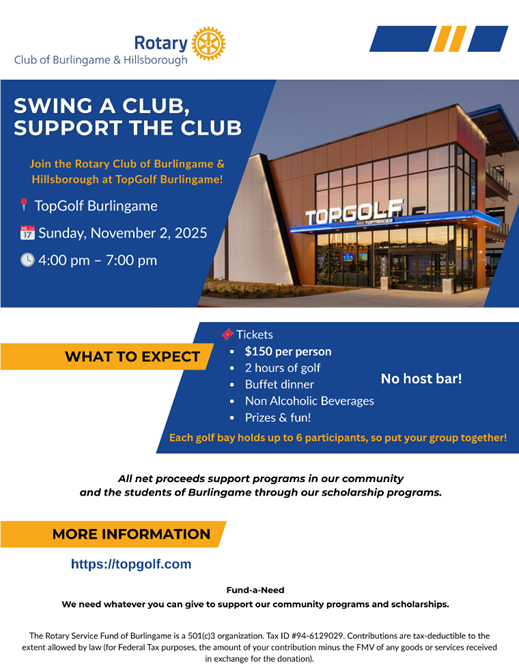
Jennifer Pence talked about the upcoming Rotary fundraiser at Topgolf. The event is on Sunday, November 2, 4 p.m. to 7 p.m. The first hour is for socializing and includes a buffet and raffle. The bays will open at 5 p.m. Tickets are $150/person. Registration is available at the lunch meeting or via the Burlingame Rotary website. Jennifer encourages everyone to register within the next week as we need to give a final head count to Topgolf. Jennifer is also looking for sponsors for the event. Sponsorship levels range from $1,000 to $10,000.
Jennifer also gave previews for upcoming lunch meetings. There are great meetings planned in the next two weeks, so make sure you come!
President Doug announced that we still need additional High Gear writers. Now that we use AI to summarize the meetings, it’s a lot easier. Please sign up!
Jeff Krolik emceed Trivia Time, with prizes! Congrats to Lisa Goldman and Al Royse for winning! And thanks for the chocolate bars!
Program:
Charlene Drummer introduced today’s speaker, Tami Mulcahy, and her presentation, “The Impact of Plastic on our Health and What You Can Do”. Tami is a Rotarian with the Los Altos Rotary Club, which has been a supporter of our international service project in India. Her club is working on an international service project in Uganda. Tami is a former physical therapist, a singer, and a songwriter.
Tami is inspired by her two grandchildren. How can we step up and protect these kids, and their kids, from the impact of plastic on our world? Plastic comes from fossil fuel, and chemical additives are added to give the plastic shape. Some of the additives have been proven to be hazardous, like Bisphenol A (BPA), which was commonly used to make baby bottles and is an endocrine disruptor. These chemicals disturb the body’s hormone system and can cause cancer, diabetes, and other illnesses. PFAS chemicals are called forever chemicals. They can cause liver damage, developmental delay, and cancer. They are usually found in stain and water repellants like those on clothing, carpets, and furniture fabric. They are also in oil and grease resistant coatings, like those in microwave popcorn bags. Phthalates are found in everything with a synthetic fragrance. They have been associated with hyperactivity, aggression, and attention deficient disorder. The entire class of phthalates should be eliminated. Tami advised us all to stay away from plastic!
Why isn’t the medical community doing more about plastics? Various medical groups are starting to sound the alarm. Recent research shows the United States has $650 billion in health-related costs associated with plastics.
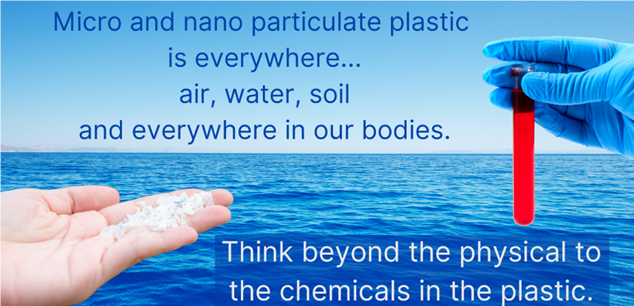
Micro- and nano-particulate plastic is everywhere—air, water, soil, and everywhere in our bodies. The chemicals attached to the plastics are the problem. Microplastics are in the placentas of unborn babies and breast milk. They are crossing the blood/brain barrier, with microplastics now found in brains.
How do we set this right? Everyone has had significant exposure to the chemicals in plastic. Plastic contamination is rampant in bottled water. A study found that 92% of bottled waters contain microplastics. Plastic bottled water contains 60 times more microplastics than found in tap water. We need people to switch to reusable water bottles.
60% of our clothing is made from fossil fuel. Natural fibers like cotton, linen, hemp, silk, and wool are ok. Lots of exercise clothing, including socks, contains BPA. Chemicals leach with heat, so natural fibers are much safer. Microfibers in laundry are emerging contaminants, posing a growing threat to the global environment. Fast fashion is mostly petro-chemical based. Don’t buy it!
42% of plastic waste comes from food packaging. Use bees wax wraps and reusable vegetable bags rather than storing your food in plastic. Glass jars are also better.
Much of our plastic gets balled up, put on shipping containers, and shipped off to developing countries, creating health problems for the people sorting through the plastics.
The US is the top plastic consumption country. We need to take action. Ditch disposables, especially black plastic, which is particularly toxic. Most items that have a recycling number at the bottom aren’t actually recyclable.
There’s a crowd-sourced app that can tell you if you have microbeads in your products. It’s called “Beat the Micro Bead.”
Powdered laundry and dish detergent in boxes are better than liquid detergents in plastic bottles. Bar soap is better than liquid soap in plastic bottles. Beware of synthetic fragrances in scent diffusers and candles. Choose wood cutting boards rather than plastic. Get rid of black plastic cooking utensils. Use wood and silicon rather than plastic. Glass bottles are better than aluminum cans, which have plastic linings. Cast iron and aluminum pans are safer than Teflon-coated pans.
Tami finished her talk by discussing her work with fellow Rotarians on plastics-related projects in Uganda and other countries, highlighting the challenges of plastic waste management and the lack of technology for cleanup. She explained initiatives to repurpose plastic waste, such as using sewing machines to create bags and melting plastic down for tiles or beads in refugee settlements.
Tami also mentioned her involvement with the Environmental Sustainability Rotary Action Group (ESRAG), which has nine task forces focused on various environmental issues. Interested in getting involved? You can find more information at ESRAG here: https://esrag.org/.
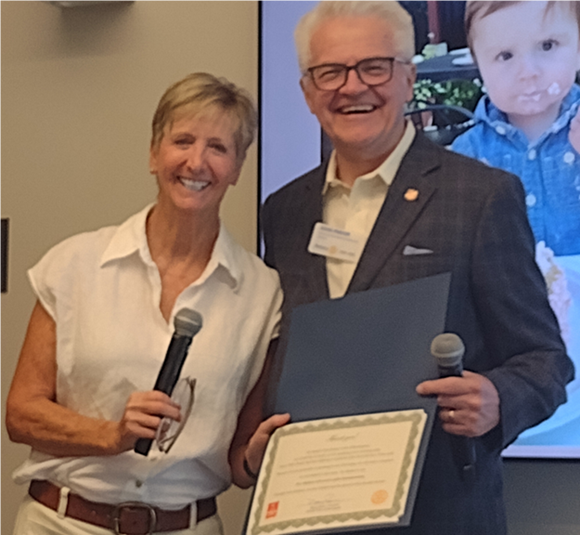
President Doug closed out the meeting after thanking Tami and presenting her with a certificate noting that Burlingame Rotary is donating polio doses in her name.