Carol Tanzi stood in for Fritz, giving the meeting a royal touch. She called the meeting to order just after 12:15pm.
Pledge
We were led in the Pledge with the requisite mishmash of American flags pulled up from a search of Google images. Why have one flag when you can have 15?
Invocation
Paul Watermulder told us that he considered a number of topics for this week’s invocation, but settled on “hope.” He reminded us that Rotary is a sign of hope around the world, promoting good work and friendship. Paul cited the Global Grant for Bobba’s school as an example.
Paul tried to play a 10-minute video with clips of Bob Hope from USO shows, but the gremlins interceded, and the video was stopped.
Here is a link to that video. Paul assured us that we would find ourselves laughing for the first seven minutes and then crying for the final three minutes.
Always quick on his feet, despite an angry Achille’s tendon, Paul urged us to find hope in our lives, including in:
- Marriage
- Family
- Community
- Nation
- Friends
He wrapped up by encouraging us to use hope to look forward and enjoy life.
Guests of the Club and Visiting Rotarians
There were no visiting Rotarians.
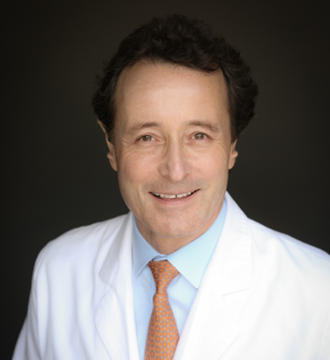
Guests of the Club included Jeff Krolik and Dr. Lorne Rosenfield, a former Burlingame Rotary member.
And, stalwart Zoomer, Pierre, was joined by Fritz, who was streaming from Sea Ranch.
Announcements
Carol thanked the Fun Fairies for another fabulous party with special thanks to Suzanne and Mark for sharing their home and providing the famous delicious bites and drinks. She also thanked Marilyn for her goodie tray and Jennifer for the yummy pumpkin bread.
This year’s holiday party will be at the Community Center, with lunch catered by Sapore. Please
RSVP.
The Program Committee will meet on Thursday at 9am to plan for 2023.
The Board meeting will be via Zoom at 4:30pm. Reach out to a Board member if you’d like the link.
Carol gave us a nice bit of time for the always lively fellowship.
Program
Marilyn introduced our speaker, Dr. Lorne King Rosenfield, a board-certified plastic surgeon who has been in private practice in Burlingame, California, since 1987. Dr. Rosenfield is an active Clinical Professor of Plastic Surgery at the University of California, San Francisco, Stanford, and Duke Universities. He has also lectured widely nationally and internationally on a wide range of aesthetic surgery topics. Dr. Rosenfield’s “Pinch” Blepharoplasty and facelift techniques have been universally adopted by his colleagues.
Dr. Rosenfield created and recently just launched a new and innovative aesthetic surgery conference called The Indie Aesthetic Surgery Summit in collaboration with Duke University. The express mission of this unique meeting is to promote demystified, unadulterated, practical teaching for the surgeon so that the patient can enjoy a more reliable and maximally safe outcome. He is presently working on two books. What Would Hippocrates Do? will explore the philosophical origins of medicine and how these same tenets could better inform our delivery of health care today. The Surgical Learning Curve will elucidate his novel approach to both the learning and teaching of aesthetic surgery through the exposure of one’s “learning curve.”
He has four children and one original wife, which he told us is an anomaly in his profession.
The witty Dr. Rosenfield opened by thanking Fritz, who invited him to speak. After a brief battle with the slide clicker, Dr. Rosenfield flashed a slide of Fritz before and after “having work done.” The before showed a Stay Puft Fritz.
Putting silliness aside, Dr. Rosenfield introduced us to the inspiration for his book, Hippocrates, who implored caregivers to do no harm. Written in the 5th century B.C., the Hippocratic Oath is one of the oldest documents in history. It has come to be a binding covenant for modern doctors who see the oath as a promise to uphold the art of medicine and act in patients’ interests. To remind today’s physicians and patients about the important messages of this ancient sage, Dr. Rosenfield conceived of a book, What Would Hippocrates Do? (Congratulations to Dr. Rosenfield for having his book accepted by the Oxford Press in advance of its completion.)
Dr. Rosenfield read from his book. Following is this editor’s best effort at capturing the key messages. If you were not able to attend or didn’t hear bits of his reading, Dr. Rosenfield’s is a highly recommended Zoom replay (link at the end).
The catalyst for What Would Hippocrates Do? was Dr. Rosenfield’s thyroid surgery and his last thoughts as the anaesthesiologist began the 10-second countdown—is this the right decision, do I have the right doctor? Having the tables turned and being the patient highlighted for Dr. Rosenfield how patients are totally at the mercy of surgeons. The objective of the book is to provide both a procedural manual on how to perform surgery as well as a guide for patients—essentially making patients better patients and surgeons better surgeons. The book covers the full process of surgery, from selection to the procedure to discharge. Explaining and providing guidance on the doctor-patient dance, which, when well choreographed, leads to positive outcomes.
Dr. Rosenfield shared with us that nearly every patient that undergoes surgery is afraid of one bad outcome—death. Unlike many of his peers, Dr. Rosenfield takes the topic head-on when talking to patients about their surgery.
Observations about today’s medicine that stood out to this editor included:
- Medicine pretends to be science and not art.
- Medicine requires an exigent North Star—why do what is being done. Without this, physicians lose a sense of purpose, and patients lose a sense of confidence.
- Hippocrates provides a touchstone that connects the wisdom of the ages to the technology of today.
- Ivan Ilyich’s thought on medicine, calling it the negation of health, sadly applies today. Despite appending modern learnings and tools, medicine is worse due to degradation of physicians’ humanity, as much of their work is taken over by technology.
Hippocrates, before making a diagnosis, spent a great deal of time with his patients. He asked questions about and examined a variety of information about patients, including:
- General health
- Family situation
- Water quality
- Stool and urine
- Blood, sweat, and tears
The regression of humanity in today’s clinical practices lies in stark comparison. Patients go into a room, put on a paper gown big enough to be a toilet seat cover, and are told to sit there in a room cold enough to chill a bottle of chardonnay. They wait there, naked, sometimes for 30 minutes, for a doctor who, when they arrive, sits down in front of a computer and goes through a list of procedural questions. The patient gets a cursory exam. It is a soul-sucking experience.
What Would Hippocrates Do? seeks to shine a light on this, to remind doctors about the humanity of their job and patients what they should expect. The book implores physicians to slow down, buck the system, look the patient in the eye, and let the patient know that they are there for them. Basically, the message is to bring humanity back to the physician/patient experience.
This drift from humanity is a systemic infliction. It is the result of converting care into a Ford Motors assembly line. The medical system has converted doctors from ships’ captains into death cadets. It has converted medicine from a calling to a job. This is not the doctors’ fault, but the system’s. Doctors are subjected to moral injury by the medical system. This is commonly attributed to “burnout,” but it is not. It is wounded souls that have been stopped from treating patients how they should be.
Doctor-patient engagements have been transmuted to lower expectations. The healthcare industry should heed the NASA mantra—it can’t be good, fast, and cheap.
A chorus from doctors and patients is needed to change the system to keep patients alive on and off the operating table. Doctors need to do the right thing no matter what, including:
- Take time with patients
- Recommend the treatment they think is right, not follow directives from corporate healthcare types.
- Ensure the best post-op care.
Dr. Rosenfield gave a scathing rebuke to doctors who complain that they don’t have enough time to hold patients’ hands, call them, etc. According to him, this is pure laziness and an excuse for bad behavior. He tells doctors to close the door and do the right thing. This was followed by the declaration that it only takes 15 seconds to hold a hand, etc. Dr. Rosenfield told us that he still makes house calls, which take about 15 extra minutes on his way to work. He told us that that impact on outcomes is wildly disproportionate and that the small effort by him has a huge impact on patients.
Before cutting to Q&A, Dr. Rosefield encouraged us to seek a second opinion if we don’t feel comfortable with a physician, their diagnosis, or treatment plan. He reiterated that one of the major drivers for the book is to help patients facilitate better care.
During Q&A, Dr. Rosenfield was asked about concierge doctors. No good news there. Dr. Rosenfield told us that there are NO qualifications. A concierge doctor can be a very good one or a very bad one. He pointed out that it’s better to wait for a good doctor than have expedited access to a bad one. Sadly, Dr. Rosenfield predicts a two-tier medical system.
With regards to Medicare for All, Dr. Rosenfield’s response was, “you’re talking to a former Canadian.” He told us that the way he sees it, Medicare for All would kill any medical mojo that the United States has in terms of striving to improve. Dr. Rosenfield predicts that the quality of care will suffer under Medicare for All.
A quiet audience was punctuated by Jerry Winges, who took umbrage with Dr. Rosefield’s indictment of physicians. He countered Dr. Rosefield, reminding us that his wife, Dr. Charlene Hsu, and his daughter are both great physicians at big healthcare organizations. Jerry said that Dr. Rosenfield was scaring people in the room and disputed the benefits of private practice from a single physician.
Dr. Rosenfield rebutted, saying that he stands by his stance that the quality of care in healthcare systems is not what it used to be. Of course, not all doctors are bad, but large healthcare organizations have rules that negatively impact patients. Yes, patients get acceptable care, but it could and should be better.
He told us that his book is not a global indictment, but that doctors need to try harder. It is, however, an indictment of how doctors treat patients. Something has been lost. What Would Hippocrates Do? aims to help bring humanity back to doctor/patient interactions.
We will let you know when What Would Hippocrates Do? is published.
Adjourn
The meeting adjourned at 1:40pm.
Link to This Week’s Meeting Recording
Watch the recording of the Zoom meeting
here.
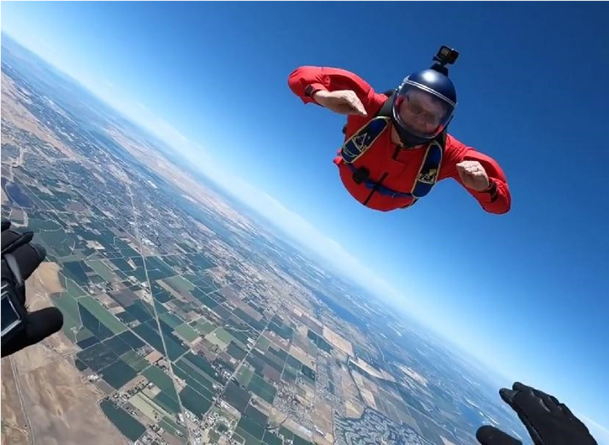
Next week’s speaker will be Rob Fenn with Parachutes on the Air.
Rob is a paramedic with AMR working in Santa Clara County. When he’s not responding to 911 calls, he’s jumping out of airplanes. Rob has been the Team Coordinator for Parachute Mobile for 13 years. Rob is also Vice President for Palo Alto Amateur Radio Association, which is one of many ham radio clubs in the area.
Rob will explain why they jump out of perfectly good airplanes to make Ham Radio contacts while floating to earth. He will have some of his gear to demo. You will not see this too many places. Don’t miss it.
As stated, we request an RSVP so we can give the caterer a number. Simply click on the link below and let us know if you plan to attend or not. Thank you in advance and hope to see you all there.